
Pavers vs. Concrete: What Really Holds Up Best in the Vegas Heat
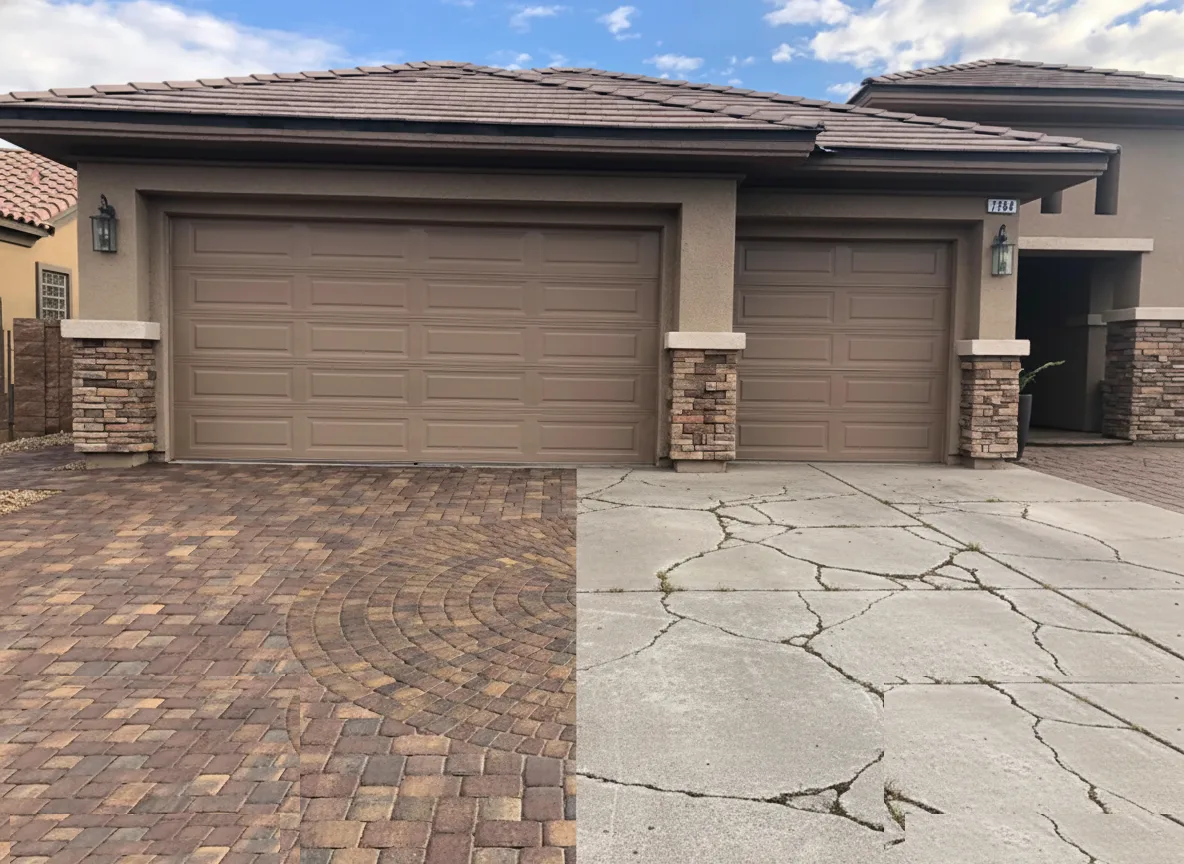
Anyone in the Las Vegas valley knows the sun does not mess around. When it is time to redo the backyard or driveway, the classic question comes up: pay more for pavers, or can regular concrete handle the job? This is the decision guide, not a crack post. Here is how the two compare over the life of the surface, not just on the first invoice.
Upfront price versus cost over a decade
Concrete usually wins the first invoice. Pavers usually win the decade. Poured concrete is cheaper to install, but in this valley it is on the clock, because thermal swings and shifting soil crack rigid slabs, and a cracked slab is either patched visibly or torn out. Pavers cost more upfront and are repaired unit by unit with no seam. So the honest comparison is not the install price, it is the install price plus ten years of what happens next.
Heat and barefoot comfort
This is the difference people underestimate. A dark slab in full sun runs 40 to 60 degrees above air temperature, past 150°F on a 110°F afternoon, which is why nobody crosses it barefoot in July. A lighter paver in the same spot can run 20 to 30 degrees cooler, and color is a free choice. If the surface is a pool deck or a patio you actually want to use in summer, this alone often decides it. More on that in our guide to a backyard that is too hot to use.
Maintenance and repair
Concrete repair is visible: patches rarely match, and a re-pour ages differently from the slab beside it. With pavers, a stained or damaged unit is lifted and swapped, the joint sand is re-swept, and the surface looks original. Over years of desert sun, sprinkler overspray, and monsoon runoff, invisible repair is worth real money.
Resale, and which to choose where
A paver finish reads as a finished, intentional outdoor space, the resort look buyers notice, and a usable yard is a real differentiator here where so many backyards sit empty for a third of the year. For a plain utility slab out of sight, concrete is fine. For anything you look at, walk on barefoot, or want to help sell the house, pavers are usually the better ten-year decision.
"The honest comparison is not the first invoice. It is the first invoice plus ten years of what happens next."
Already staring at a cracked slab? That is a different question, read why your concrete keeps cracking and your three real options. Otherwise, see our paver services, browse the project gallery, or request a free quote.
How long each actually lasts in this valley
A properly installed paver surface here commonly lasts 25 to 30 years or more, because damage is local and repairable: a settled or stained section is lifted and reset without touching the rest. Poured concrete in the same yard often shows its first structural cracks within 5 to 10 years, sped up by thermal cycling and expansive soil, and once a slab cracks the clock is running on a patch or a tear-out. The gap is not that concrete is fragile, it is that a monolithic slab has no way to absorb ground movement while thousands of interlocked units do.
When concrete is actually the right call
Pavers are not the answer to everything, and pretending otherwise costs credibility. Concrete is sensible for a hidden utility pad, a shed floor, a side-yard walkway nobody sees, or any surface where appearance and repairability genuinely do not matter. It also works as a structural base you plan to overlay with pavers later. Where it struggles is exactly where most homeowners spend their money: the visible, barefoot, resale-facing surfaces baking in full sun. Match the material to how the space is actually used and the decision usually makes itself.
Frequently asked questions
Are pavers worth it over concrete in Las Vegas?
Usually, if you care about the surface. Concrete is cheaper to install but cracks under our thermal swings and shifting soil, while pavers flex, are repaired unit by unit, and hold value better over a decade.
Do pavers get as hot as concrete?
A light paver runs cooler than a dark slab, and color is a free choice. In full sun any hard surface gets hot, so lighter tones and shade matter more than material alone.
Which is better for a driveway?
Pavers, for most homeowners. They carry vehicle loads on a compacted base, and a damaged unit is swapped without leaving a visible patch.
Ready to compare pavers and concrete for your yard?
Tell us the space and we will show you the real ten-year cost of pavers versus concrete for it.
Get a Free Design Consult