
Your Concrete Cracked Again. Here Is Why, and Your Three Real Options.
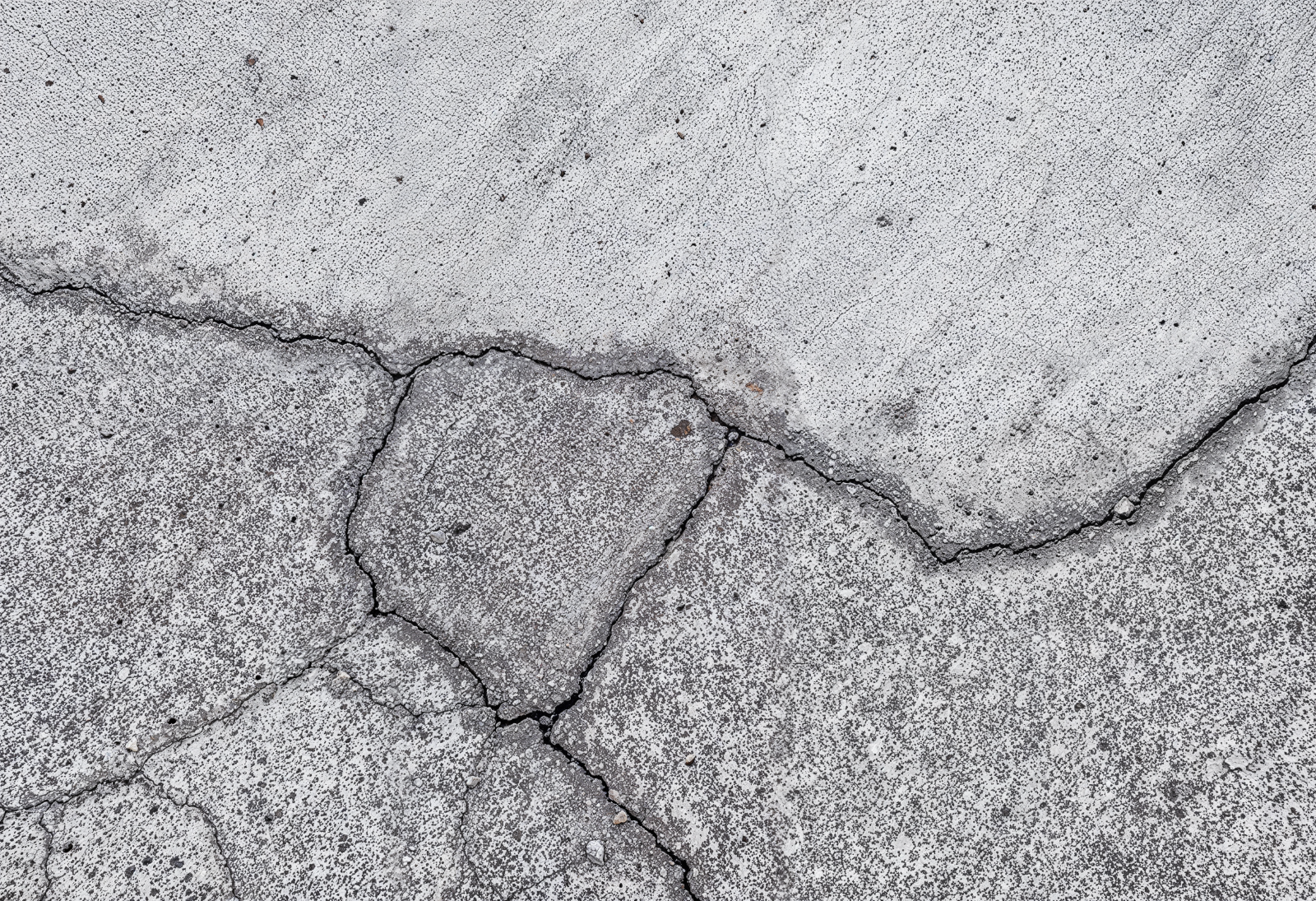
You had it patched two years ago, maybe replaced five years ago, and there it is again. The frustrating part is not the crack. It is the suspicion that you got bad work. Usually you did not.
Why Las Vegas is hard on concrete
Three site conditions do most of the damage. Thermal cycling: summer swings here exceed 30 degrees daily and 80 seasonally, and concrete expands and contracts with every one. The soil: much of the valley sits over caliche at inconsistent depths, and expansive clays swell wet and shrink dry, so parts of a slab lift and settle differently. Water: tight lot lines and minimal grade mean storm water often ends up under slabs instead of running off them. None of these are contractor error, which is why the answer is not to hire someone better, it is to build something that tolerates movement.
Read your own cracks
- Hairline web pattern, no height difference. Shrinkage or surface crazing. Cosmetic.
- A straight crack at or near a control joint. The slab doing what it was designed to do. Cosmetic; seal it and move on.
- A crack with a height difference between the two sides. The important one. If you can catch your foot on it, one side has settled, and patching will not hold while the ground is still moving.
- Flaking, pitting, powdery surface. Spalling, common near sprinkler overspray. It spreads.
- A section that rocks underfoot. A void underneath. Address it before it is a trip hazard.
Your three options
- Repair. Crack sealing, joint filling, and foam injection to lift settled sections. Right when the slab is broadly sound and the cause is identified. This is the cheapest option and often the correct one, and if nobody bidding your job will offer it, that is information.
- Replace with concrete. Works when the base is genuinely rebuilt and grade corrected, but a new monolithic slab faces the same forces if the site conditions have not changed.
- Replace with a segmental paver surface. Thousands of small units that interlock but move independently, so when the ground shifts the surface flexes instead of fracturing. If a section settles, you pull the units, fix the base, and reset them, with no permanent patch.
In this soil, the compacted base does more for longevity than whatever goes on top of it.
"The answer is not hire someone better. It is build something that tolerates movement."
Not sure whether your crack is cosmetic or structural? It often comes down to whether water is moving under the slab, so it is worth reading our guide to backyard grade and drainage. Then see our paver services or text us a photo of the crack and we will tell you whether to rebuild or leave it alone. And if you are weighing a full replacement, our pavers vs. concrete comparison covers which surface is the better ten-year decision.
How to keep the new surface from cracking again
Whichever option you choose, the fix only holds if it addresses why the first one failed, and three things do most of the work here. First, the base: excavation to the right depth with aggregate compacted in lifts, a few inches at a time, is what carries the surface over shifting soil. Second, drainage: if water is reaching the subgrade from a downspout, irrigation, or poor grade, it will move the ground again, so it has to be redirected as part of the job, not after. Third, the right surface for the movement: a segmental paver system flexes and can be reset, while a new monolithic slab in the same conditions faces the same forces. Get those three right and you are not back here in five years.
Frequently asked questions
Why does concrete crack so much in Las Vegas?
Extreme thermal cycling, inconsistent soils including caliche and expansive clay, and water intrusion under slabs. Most valley cracking is ground movement, not poor workmanship.
Is it cheaper to repair or replace a cracked driveway?
Repair is cheaper and often right for cosmetic cracks. It is wrong when soil movement is the cause, and the tell is whether the two sides sit at different heights.
Can you put pavers over a cracked concrete driveway?
Sometimes, if the slab is stable and the cracking is cosmetic. If sections have settled, overlaying transfers the problem upward.
Cosmetic crack, or a structural problem?
Text or email us a photo and we will tell you straight, no obligation.
Text Us a Photo